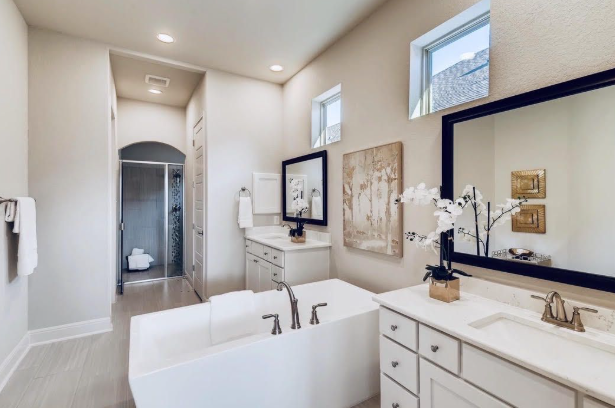
A bathroom layout should separate wet, dry, and storage zones for clear circulation. From the entrance, sightlines stay honest as fixtures anchor a path to sink, shower, and toilet. Use modular, wall-mounted pieces and recessed niches to keep surfaces clutter-free. Balance light sources with reflective finishes to blur boundaries and expand the feel. Start with a practical frame, then refine for daily routines; the next step reveals how to fit it all in.
Start With a Practical Bathroom Layout Framework
A practical bathroom layout framework starts with clear zones: wet, dry, and storage. Conceptual zoning guides spatial logic, separating moisture from movement and belongings.
Circulation optimization shapes flow, aligning entry, sink, shower, and toilet for effortless navigation.
The framework emphasizes adaptable dimensions, honest sightlines, and scalable modules, enabling freedom in future changes while maintaining precise, visual cues for builders and designers.
Plan Fixture Placement for Smooth Daily Use
Fixture placement should prioritize daily routines: the toilet, sink, shower, and storage sit within easy reach from the door and between wet and dry zones, reducing steps and awkward turns.
The layout establishes fixtures rhythm, guiding circulation harmony without excess motion. Clear sightlines, consistent spacing, and logical adjacency support fluid use, accessibility, and freedom in movement throughout the bathroom.
Maximize Storage Without Cluttering
Maximize storage without clutter by weaving discreetly integrated solutions into the bathroom’s rhythm. Hidden niches, recessed shelves, and vertical organizers transform spaces without visual bulk. Compact vanity, wall-mounted cabinets, and pull-out trays optimize every inch for storage optimization. Concealed baskets and labeled containers support clutter control, while glass fronts maintain openness. Functional zoning supports freedom, clarity, and effortless daily routines.
Light, Flow, and Finishing Touches for Tiny Spaces
Light and flow define tiny bathrooms as much as fixtures do, with natural and artificial illumination balancing space and mood to prevent a cramped feel.
Lighting ideas illuminate contours without glare, while color and reflective surfaces enhance depth.
Finishing touches emphasize minimal seams and tactile quality.
The aim: cohesive space flow that feels liberated, bright, and functionally serene for compact baths.
Frequently Asked Questions
How Do I Ensure Wheelchair Accessibility in a Small Bathroom?
The answer: To ensure wheelchair accessibility, prioritize tips for maneuver space, accessible fixture placement, design friendly grab bars, and compact turning radius; the design remains visually clear, precise, and freedom-focused while enabling independent use in small bathrooms.
See also: nurokindia
What Are Affordable, Eco-Friendly for Bathroom Surfaces?
Waves of possibility wash over one, as the answer: sustainable countertops, recycled glass, cork flooring, and low VOC paints offer affordable, eco-friendly bathroom surfaces; a concise, precise palette empowering freedom and responsible choices for thoughtful spaces.
How Can I Ventilate Without Compromising Design?
Ventilation aesthetics can be achieved with hidden vent strategies and privacy airflow concepts, pairing slimline fans with discreet ducting. Emphasize material sustainability and low VOC finishes to preserve design integrity while maintaining effective airflow and quiet operation.
Which Colors Improve Perceived Space on a Budget?
A simile: like a breeze across a bright neutrals palette, they believe colors that expand space appear on budget blues and airy whites. They blend warm accents with bright neutrals, using airy whites to read as generous, open, free.
What Maintenance Routine Extends Fixture Longevity?
Maintenance routines extend fixture longevity through regular cleaning, inspection, and timely repairs. Maintainable fixtures resist wear with gentle agents, while corrosion prevention hinges on sealing, proper venting, and routine mineral buildup control for durable, confident bathroom use.
Conclusion
In a compact bathroom, simplicity clashes with luxury: a crisp framework meets intimate clutter. The plan aligns wet, dry, and storage, yet reveals quiet moments of generous light and mirrored surfaces. Juxtaposed elements—streamlined fixtures against recessed niches—create order from restraint. Function walks beside serenity, as doorways open to clear sightlines and clutter-free surfaces. The result is a room that feels larger in intention than footprint, where precise layout and soft finishes coexist, guiding daily rituals with calm efficiency.